
Waste-to-Energy: Turning Trash into Power
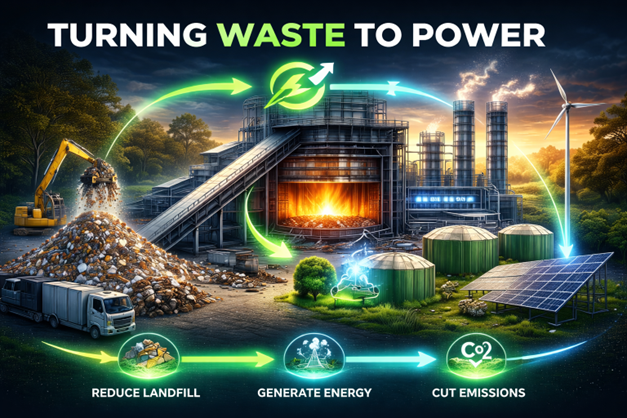
Waste-to-energy (WtE) is exactly what it sounds like—converting everyday waste into usable energy such as electricity, heat, or fuel. Instead of sending rubbish to landfill, WtE technologies extract value from it, helping tackle two big challenges at once: waste management and energy demand.
2 min read
What is Waste-to-Energy?
Waste-to-energy refers to a range of processes that transform non-recyclable waste into energy. The most common method is incineration, where waste is burned at high temperatures to produce steam that drives turbines for electricity.
Other technologies include:
· Anaerobic digestion – organic waste (like food or agricultural waste) is broken down by bacteria to produce biogas
· Gasification – waste is converted into a synthetic gas (syngas) that can be used as fuel
· Pyrolysis – waste is heated without oxygen to produce oils, gases, and char
These approaches reduce landfill dependency while recovering energy from materials that would otherwise go unused.
How Does It Work?
While methods vary, the general process follows a similar flow:
1. Waste Collection & Sorting
Waste is collected and sorted to remove recyclables and hazardous materials. Only non-recyclable waste is used for energy recovery.
2. Processing
The waste is treated depending on the technology:
· Burned (incineration)
· Broken down biologically (anaerobic digestion)
· Heated chemically (gasification/pyrolysis)
3. Energy Generation
The process produces:
· Heat → used directly or converted to steam
· Electricity → via turbines
· Gas or fuel → for heating, transport, or industrial use
4. Emissions Control
Modern facilities use advanced filtration systems to reduce emissions and comply with strict environmental standards.
5. Residual Handling
Remaining ash or by-products are treated, with some materials reused (e.g., metals recovered from ash).
Benefits of Waste-to-Energy
♻️ Reduces Landfill Use
WtE can reduce waste volume by up to 90%, significantly lowering landfill demand and associated environmental issues.
⚡ Generates Reliable Energy
Unlike solar or wind, WtE provides consistent, baseload energy, helping stabilise energy systems.
🌍 Cuts Greenhouse Gas Emissions
By diverting waste from landfill (where it produces methane), WtE can lower overall emissions when managed properly.
💰 Creates Economic Value
Waste becomes a resource:
· Energy production
· Job creation
· Potential revenue streams for municipalities and businesses
🔄 Supports Circular Economy
WtE complements recycling by dealing with non-recyclable materials and recovering value from them.
Things to Consider
While WtE has clear advantages, it’s not without challenges:
· High upfront investment costs
· Public perception and environmental concerns
· Needs careful integration with recycling systems (not a replacement)
The best approach is a balanced waste hierarchy: reduce → reuse → recycle → recover energy → landfill (last resort).
The Future of Waste-to-Energy
As energy systems shift toward sustainability, WtE is becoming a key part of integrated energy and waste strategies. Advances in carbon capture, cleaner combustion, and smart waste sorting are making it even more efficient and environmentally friendly.
For businesses, cities, and energy providers, waste-to-energy isn’t just a disposal method—it’s a strategic opportunity to turn a cost centre into a value-generating asset.