
Waste-to-Energy: From Cost Centre to Strategic Asset
For years, waste has been treated as a liability—something to manage, minimise, and ultimately dispose of. But what if waste wasn’t the end of the value chain… What if it was the beginning? At GreenGuard Energy, we see Waste-to-Energy (WtE) not just as an environmental solution, but as a commercial opportunity for smarter energy ecosystems.
4/2/20261 min read
🔄 What is Waste-to-Energy — Really?
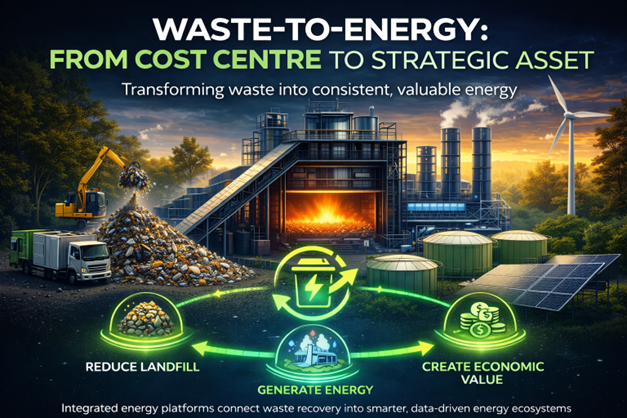
Waste-to-energy is the process of converting non-recyclable waste into usable energy—electricity, heat, or fuel.
Technologies such as:
Anaerobic digestion (for organic waste)
Gasification and pyrolysis (for mixed waste streams)
Advanced thermal recovery systems
…are enabling organisations to recover value from what was previously written off.
⚡ The Strategic Shift: Waste → Data → Value
The real transformation happens when WtE is combined with intelligent energy management platforms like Vema.
This is where things get interesting.
Instead of simply generating energy, organisations can:
Monitor generation vs consumption in real time
Optimise when and how energy is used or stored
Integrate with solar, EV charging, and battery systems
Turn energy flows into measurable financial outcomes
Waste-to-energy becomes part of a connected, data-driven energy ecosystem.
💡 Why This Matters for Partners
For our partner network—
🔌 Electrical contractors
🌱 Renewable installers
🚗 EV infrastructure providers
🏢 Facilities management companies
📊 Energy consultants
WtE opens up new commercial pathways:
1. New Revenue Streams
Energy recovery + optimisation = monetisation opportunities beyond installation.
2. Deeper Customer Engagement
You move from a one-off install to ongoing energy performance partnerships.
3. Differentiation in a Competitive Market
Clients aren’t just buying systems any more — they’re buying outcomes: savings, resilience, sustainability.
4. Contribution to Net Zero
WtE reduces landfill dependency and methane emissions while supporting decentralised energy.
📊 The Bigger Opportunity
When you connect waste-to-energy into a platform like Vema, you unlock:
Visibility → where energy is created, lost, or underutilised
Control → smarter decisions across assets
Commercialisation → turning energy into measurable ROI
This is how we shift from:
“managing energy costs” → to → engineering energy value
🚀 Moving Forward
Waste-to-energy isn’t a replacement for renewables or efficiency—it’s the missing piece in a fully integrated energy strategy.
The question is no longer:
“How do we dispose of waste?”
It’s:
“How do we turn every wasted resource into a performance asset?”
💬 I’d be interested to hear from others in the space:
How are you integrating waste streams into your energy strategy—and are you measuring the value beyond just disposal costs?
If you're exploring how to integrate waste-to-energy into a connected energy platform, or want to unlock new partner revenue streams, feel free to reach out.