The Procurement Trap: Why Engineering Substance Trumps Management Theory
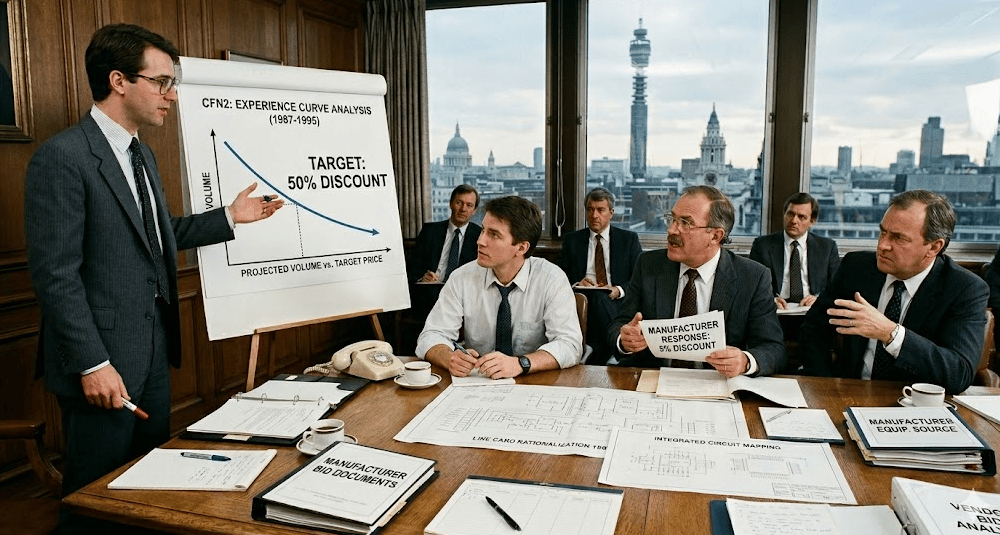
In 1987, I led a two-man engineering team at British Telecom (BT) tasked with resolving a high-stakes financial stand-off. At the time, BT was rolling out the second tranche of City Fibre Network (CFN2), a cutting-edge infrastructure project with a projected spend of over £700 million (more than £2.5 billion at today’s prices). The project sat at the centre of a fundamental disagreement that remains a primary bottleneck for infrastructure and AI hardware rollouts today: Can you "wish" a price decline into existence through volume alone, or do you have to engineer it?
2 min read
The Standoff: 50% vs. 5%
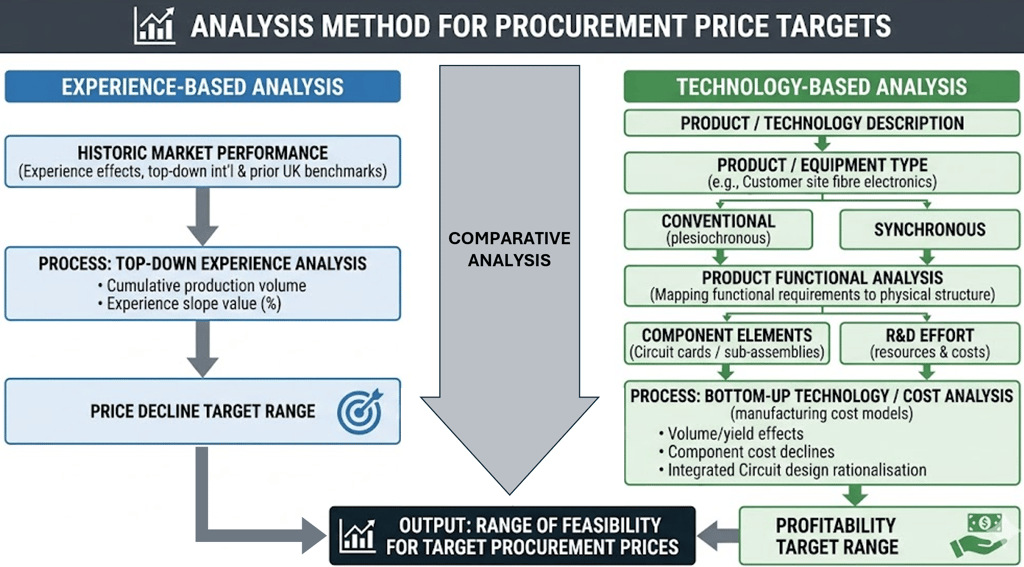
A top-tier management consulting firm had presented a "Top-Down" analysis. Based on international experience curves, they argued that as BT’s purchasing volume grew, equipment prices should drop by 50%.
The manufacturers, naturally, balked. Their counter-offer was a mere 5% discount, and only if BT agreed to "de-rate" the quality of its connectors. BT was effectively being told that significant price declines were impossible despite the massive volume of orders being signalled.
The Method: Bottom-Up Engineering Substance
We didn’t just look at the spreadsheets; we looked at the circuit boards. Our team conducted a "Bottom-Up" technology analysis. We performed detailed PCB audits that revealed the manufacturers were using legacy designs and component technology to justify their high price points.
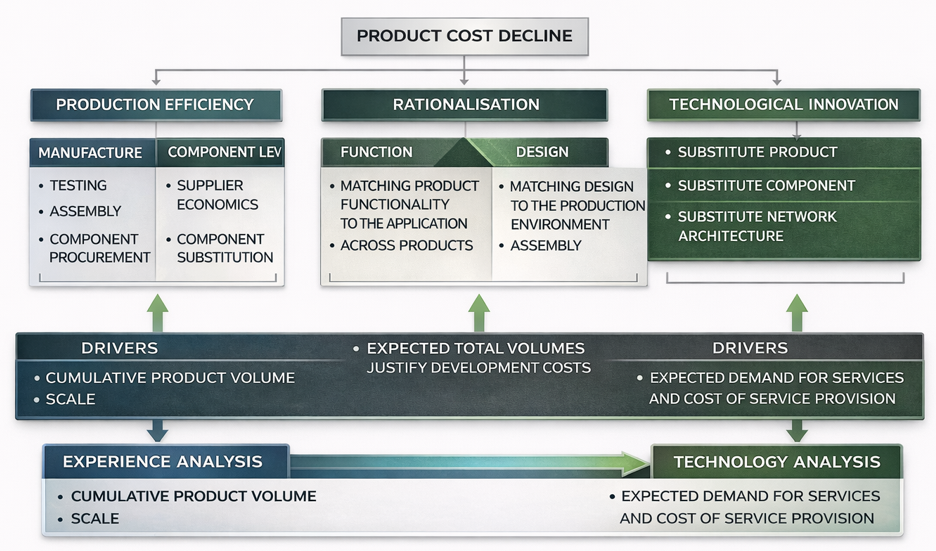
By mapping out how discrete technology developments - specifically modern integrated circuits like SLIC and SLAC - could rationalize multiple circuit cards into one, we proved the feasibility of a technical roadmap that would:
Reduce physical volume of equipment by a factor of four.
Slash power consumption by a factor of three.
Halve system prices by 1990.
When we presented the evidence—including a projected R&D cost of just £4 million to unlock £328 million in savings (over £1.2 billion at today’s prices) - the manufacturers conceded. The "impossible" 50% discount became the new baseline for procurement.
The Modern "Procurement Trap"
The lessons from this 1987 project are as relevant in 2026 as they were before. Many organisations still fall into the same three traps:
The CAPEX vs. OPEX Blind Spot: Procurement functions are often rewarded for short-term contract discounts (CAPEX). However, they rarely have a solid visibility into the Total Cost of Ownership (TCO). Equipment rationalisation doesn't just lower the price tag; it creates a ripple effect of savings in racking space, building accommodation, energy costs, and power cooling - often very significant costs hidden in rollout plans.
Fragmented Responsibility: Even when engineering can prove that a modern design will save 3x in power, the savings often fall into a different department's budget (Facilities vs. Technology). Without senior leadership bridging these silos, millions in ROI are left on the table.
Manufacturer Inertia: Left to their own devices, vendors will preserve legacy architectures to protect margins. Without a bottom-up technical audit, an organisation is essentially "wishing" for efficiency rather than mandating it.
The "So What" for Senior Leaders
Whether you are a Private Equity firm auditing an infrastructure portfolio or a CTO planning a multi-year AI data centre expansion, the takeaway is clear: Engineering is the ultimate procurement leverage.
Audit for Technical Debt: Don't pay 2026 prices for a legacy architecture.
Incentivise TCO: Measure your procurement success on lifecycle trade-offs, not just headline discounts.
Demand Substance: Don't let "experience curves" or manufacturer pushback dictate your margins. Use engineering to define what the price should be.
Are you planning a major technology investment?
Don’t leave your ROI to guesswork and manufacturer inertia. We specialize in bringing engineering substance to financial projections. Let’s discuss how a bottom-up technology analysis can de-risk your next procurement cycle.
#Procurement #EngineeringSubstance #TotalCostOfOwnership #Infrastructure #LeadershipInsights